 Some parents come into the pediatric sedation conversation already decided. Others come in actively weighing the choice – and at Shelby Pediatric Dentistry, this page is built for the second group. The framing here is decision-support, not persuasion. Sedation is one of two reasonable paths in a lot of situations, and we’re not interested in nudging you toward whichever answer is quicker for the schedule.
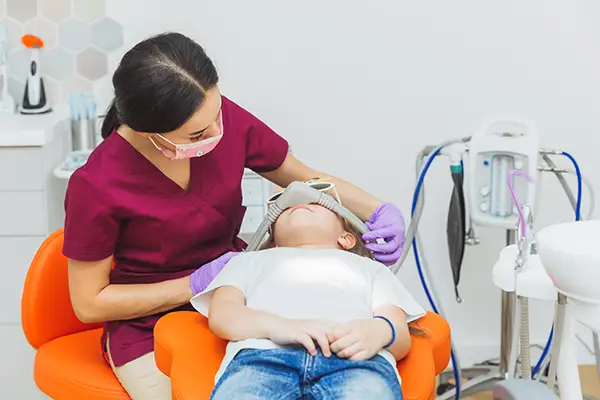 The lighter option is nitrous oxide, what most people know as laughing gas. Your child breathes it through a soft nose mask, and within a few minutes most kids feel lighter and less braced. They stay awake, they breathe on their own, and the effects clear within minutes once the mask comes off. Nitrous lowers anxiety and softens chair-time tolerance issues without putting the child to sleep, which is why it’s the more frequent recommendation for the cases where sedation is genuinely optional.



Frequently Asked Questions
What if my child has an underlying medical condition – does that change sedation options?
Often, yes, in one direction or the other. Asthma, certain cardiac conditions, sleep-disordered breathing, certain syndromes, recent illness, and specific medications can all factor into whether nitrous is appropriate, whether general anesthesia is the better path, or whether the visit needs to be coordinated with your child’s pediatrician first. None of these conditions automatically rules anything out – they shift the calculation, sometimes meaningfully. The intake conversation is where we work this out together. If your family is newer to our office, your first visit is when the dentist establishes the medical baseline that the sedation conversation builds on.
How does the dentist help us weigh sedation versus no-sedation?
By laying out the trade-offs explicitly. The dentist will walk through three things: what the procedure asks of the chair time, what your child has shown so far in the dental setting, and what splitting visits would mean for your family schedule and your child’s anticipatory anxiety. If both options are reasonable, the dentist will say so – and the choice is yours, with no undertone that one answer is preferred. If one is clearly better, the dentist will say that too, and explain why. The conversation isn’t designed to land on the answer that’s faster for our schedule. Family-internal factors – whether both parents agree, whether a difficult week is coming up, whether finances make a longer single visit easier or harder – are all yours to weigh.
What signs should make us lean toward sedation rather than away from it?
A few. A procedure that can’t be split into shorter visits without major disruption to your family or your child’s anxiety – for Cleveland County families, that disruption often means two separate trips into Shelby for one course of treatment. A child whose history at past visits shows escalating distress rather than settling. A child whose temperament makes sit-still time genuinely hard regardless of cooperation. A medical picture that makes a single sedation visit safer than multiple non-sedated attempts. None of these is decisive on its own; together, two or three of them tilt the calculation noticeably toward sedation.
If we decline sedation today, can we change our mind during the visit?
Sometimes. For nitrous, the dentist can occasionally switch mid-visit if the child isn’t tolerating the procedure unaided – the equipment is in the room and the dose is light. For general anesthesia, no, that requires advance scheduling and an anesthesiologist. The cleaner path is to make the call before the visit starts, but the dentist can usually accommodate a nitrous decision if it becomes clear the procedure isn’t going to finish without it. Mid-visit changes are less ideal because the child has already been through the part that overwhelmed them.
What if our child has had a recent illness – should we reschedule?
Often yes, and we’d rather you call than show up unsure. A current cold or recent fever, recent vomiting, an unresolved upper respiratory infection, or any acute illness in the past few days can all affect whether the sedation visit is safe to proceed with as planned. Call the office a day or two before the appointment if anything has changed since scheduling. We’ll figure out together whether to keep the visit or reschedule. For procedures we’re rescheduling regularly – cleanings, exams, sealants – preventive dentistry in Shelby runs more flexibly than the sedation track does.