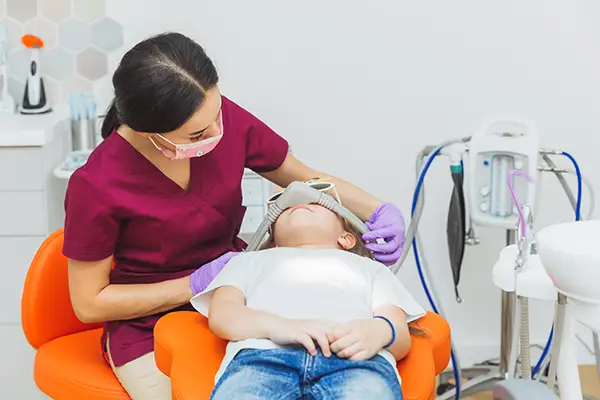
 “Laughing gas” carries a lot of cultural baggage that has very little to do with what nitrous oxide actually does in a pediatric dental visit. The nickname comes from old TV gags and viral post-wisdom-tooth videos, and it sets up parents to expect something dramatic. At Mebane Pediatric Dentistry, the pediatric sedation conversation almost always involves resetting that picture. What happens with nitrous in a pediatric chair is far quieter and far less performative than the cultural reputation suggests.
 The lighter option is nitrous oxide. Your child breathes it through a soft nose mask, and within a few minutes most kids feel lighter and less braced. They stay awake. They still respond when the dentist talks to them. They breathe on their own. Once the mask comes off, the effects clear within minutes. Most parents who watch a nitrous visit through to the end describe it as anticlimactic, in the best sense – a child who looked apprehensive going in is just calmer afterward.

Frequently Asked Questions
How early should we arrive for a sedation appointment?
Plan to arrive about fifteen to thirty minutes before the procedure. The first chunk of that time is paperwork – a sedation-specific intake that covers any new symptoms in the past few days, current medications, the last meal and drink times, and a quick confirmation of the consent details. The remaining minutes are the calm-down buffer. Walking straight from the car into a procedure rarely lands well, especially when the family came in off I-40 or I-85. Your dentist will give you a specific arrival time when scheduling. Building in a couple of extra minutes on top of that, especially for a child who’s sensitive to feeling rushed, is usually time well spent.
Will my child actually laugh from laughing gas?
Probably not, no. Some kids get a little chatty, some get quieter, most just settle into the chair. The dramatic reactions you see in viral videos are usually adults on stronger doses for oral surgery, plus a camera making everyone perform. In a pediatric dental setting at the doses appropriate for kids, the experience is far less theatrical and that’s by design.
Will my child remember the visit afterward?
With nitrous, usually yes – though sometimes the visit feels fuzzier in their memory than it actually was, especially for younger kids. With general anesthesia, no – your child will sleep through the procedure entirely with no awareness of it afterward. Both outcomes are normal for the kind of sedation involved, and neither one means anything went wrong.
Are there any restrictions on what my child can eat or drink before a nitrous visit?
For nitrous specifically, restrictions are usually lighter than for general anesthesia – we typically recommend a light meal no closer than a couple of hours before the appointment, mainly to avoid nausea, not for safety reasons. For general anesthesia, the no-food-or-drink window is stricter and non-negotiable. Your dentist will send specific instructions home a week ahead so you have time to plan around the visit. If you’re newer to our office, your first visit is when the dentist establishes the medical and intake patterns the sedation conversation builds on.
Can I stay in the operatory with my child during a nitrous visit?
For nitrous, often yes. Many families find a parent in the operatory helps the child settle faster, which is the whole point. The exception is when a parent’s nervous energy is louder than the child’s, in which case the dentist may suggest stepping out so the child can focus on the dental team. For general anesthesia, the operatory rules tighten because of the anesthesiology setup. Routine non-sedation visits are far more flexible – preventive dentistry in Mebane runs differently from a sedation morning.