Cavities in Baby Teeth & Toddlers in Denver, NC
 Finding out your toddler has a cavity can be worrying, and the team at Denver Pediatric Dentistry is here to make it simple, treating cavities in baby teeth and toddlers in Denver, NC with gentle, child-focused care. Cavities are the most common chronic health condition in young children, and they form in baby teeth faster than in adult teeth because the enamel is thinner. The earlier we treat a cavity, the easier it is on your child and the more we protect the permanent teeth developing underneath. Finding out your toddler has a cavity can be worrying, and the team at Denver Pediatric Dentistry is here to make it simple, treating cavities in baby teeth and toddlers in Denver, NC with gentle, child-focused care. Cavities are the most common chronic health condition in young children, and they form in baby teeth faster than in adult teeth because the enamel is thinner. The earlier we treat a cavity, the easier it is on your child and the more we protect the permanent teeth developing underneath.
Tooth decay in toddlers often begins as a faint white line near the gums and darkens to a brown spot as it grows. In a small tooth, it can reach the nerve in a matter of months. Our team focuses on stopping decay early and choosing the gentlest treatment that will fully fix the tooth. Knowing how early childhood cavities develop helps explain why we do not simply wait for these teeth to fall out.
You are not alone in this, and you have not done anything wrong. Many Denver parents bring in a child with a cavity, and most of the time the treatment is quick and straightforward. Our job is to fix the tooth and send you home knowing how to prevent the next one.
On This Page
Why Young Children Get Cavities
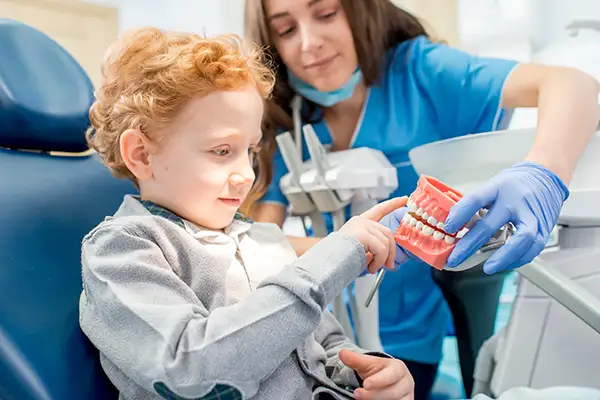 A cavity forms when bacteria in the mouth turn sugars and starches into acid, and that acid slowly wears a hole through the enamel. Baby teeth are more vulnerable than adult teeth because their enamel is thinner, so a small spot can become a real cavity within months. The process is gradual, which is why regular checkups catch decay long before it causes pain. A cavity forms when bacteria in the mouth turn sugars and starches into acid, and that acid slowly wears a hole through the enamel. Baby teeth are more vulnerable than adult teeth because their enamel is thinner, so a small spot can become a real cavity within months. The process is gradual, which is why regular checkups catch decay long before it causes pain.
How often a child eats matters even more than how much. Juice sipped slowly through the day, a bottle at bedtime, and sticky snacks keep the mouth acidic for hours and give bacteria a constant supply. That is why decay often shows up first on the upper front teeth, then the back molars.
Signs a Cavity May Be Forming
Most early cavities cause no pain, so they are easy to miss at home. A few signs are worth watching for between visits:
- White or brown spots – Chalky white lines along the gums or a brown mark on a tooth.
- Sensitivity to cold or sweets – A child who pulls back from cold drinks or sugary foods.
- Food trapping in one spot – A tooth that keeps catching food may have a hole.
- Chewing on one side – Favoring one side or refusing certain foods can signal a sore tooth.
If you notice any of these, our team can take a look and, when needed, confirm with a low-dose digital image. We treat children from across the Denver area, and most cavities we find are simple to fix when caught early.
Why These Small Teeth Matter
Baby teeth hold space for the permanent teeth, help your child chew and speak clearly, and guide the adult teeth into place. An untreated cavity can cause infection, pain that disrupts sleep, and harm to the permanent tooth forming below. Keeping a baby tooth healthy until it is ready to fall out is almost always better than losing it early, which is part of why baby teeth matter well beyond the years they are in the mouth.
Pediatric Cavity Care in Denver
Treating a cavity in a young child takes more than technical skill. It takes a team trained to keep a toddler calm and cooperative in the chair. Every dentist at Denver Pediatric Dentistry is a pediatric specialist who completed years of additional training focused on the teeth, behavior, and development of infants, toddlers, and children. That training shapes how we explain each step, how we pace a visit, and which treatment we choose for a child this age.
For your child, that means we consider their age, comfort, and how far the decay has progressed, then walk you through the plan in plain language. Our pediatric dentists care for children across the Denver area, and the dentist who plans your child’s treatment is the one who carries it out.
What Happens at a Cavity Visit
Most cavity visits for young children take a single appointment and follow four steps. We describe each one to your child in words they can understand before we begin.
A Gentle Exam and Digital Imaging
We start by looking closely at the tooth and, when decay may be hidden between teeth, taking a low-dose digital X-ray. This shows exactly how deep the cavity goes so we can match the treatment to the tooth instead of guessing.
A Treatment Plan You Approve
We explain what we found and the options that fit. A small cavity often needs only a tooth-colored filling, while a larger one on a molar may need a crown to protect the tooth until it falls out naturally. You hear the reasoning and ask questions before we start.
Comfortable Care at a Pace Your Child Can Handle
We numb the tooth gently after applying a topical gel, and we move at a pace your child can handle using a tell, show, do approach. Most fillings take just a few minutes once the tooth is numb, and we pause whenever your child needs a break. For a very young or anxious child, we also offer safe sedation to help them stay relaxed.
Aftercare and Preventing the Next Cavity
When we finish, we explain how to care for the tooth and, just as important, how to keep new cavities from forming. Usually that means a few small changes to drinks, snacks, and brushing. Our brushing tips for kids make the daily routine easier, and we set a follow-up to confirm the tooth is healing.
Why Early Cavity Care Matters
 Treating a cavity while it is still small protects much more than a single tooth. It keeps your child comfortable now and stops a minor problem from becoming an urgent one. Treating a cavity while it is still small protects much more than a single tooth. It keeps your child comfortable now and stops a minor problem from becoming an urgent one.
The earlier we step in, the simpler the fix and the more of the natural tooth we save.
- Prevents pain and infection – Early treatment heads off the toothaches and abscesses that disrupt sleep and school.
- Protects the permanent tooth – An infected baby tooth can damage the adult tooth forming directly beneath it.
- Preserves space for adult teeth – Keeping a baby tooth until it is ready to fall out helps the permanent teeth come in straight.
- Keeps treatment simple – A small filling is far easier on a child than a pulpotomy or extraction later.
- Builds comfort with the dentist – Short, positive visits early on make future care much easier.
If a tooth must come out too soon, a space maintainer can hold the gap for the adult tooth, but keeping the natural tooth is always our first choice.
Why Denver Families Choose Us
Our entire practice is built for children, not adapted to fit them. From the chairs to the way our team talks a nervous toddler through a filling, everything at our Denver office is designed for young patients. That focus matters most when a child needs treatment, because a calm, well-handled visit is very different from a frightening one.
Families also choose us for convenience and range of care. Our Denver location keeps expert pediatric care close to home, and we handle your child’s full dental needs in one place, from routine prevention that catches cavities early to pediatric emergency care when a toothache cannot wait. If your child needs more than a filling, we can treat it without sending you to another office.
We are also honest with parents. If a spot can be watched instead of treated, we will tell you. If treating now will spare your child a harder appointment later, we will explain why. That straightforward approach is a big reason Denver families stay with us.
Cost and Insurance
Cost is a fair question, and we will be straight with you. What a cavity costs to treat depends on the specifics: how deep the decay is, whether the tooth needs a filling or a crown, which tooth is involved, and whether your child needs sedation to get through the visit comfortably. Until we see the tooth, any figure would be a guess.
Most dental insurance plans cover a good portion of children’s cavity treatment as basic restorative care. Our financial office policies page explains how we handle insurance and payment, and our team will review your child’s benefits before treatment begins. Call our Denver office at (980) 303-5083 and we will verify your coverage and give you a clear estimate.
Schedule a Visit in Denver
Catching a cavity early gives your child the easiest path back to a healthy smile. Call our Denver team at (980) 303-5083 to set up a visit. You can also Click Here to Book an Online Appointment at any time. We are located at 245 NC-16, Suite 204B in Denver, NC.
Frequently Asked Questions
Are baby teeth fillings safe for young children?
Yes. The tooth-colored fillings we use are safe and durable, without the concerns some parents associate with older silver-mercury fillings. The numbing is dosed carefully for a child’s size. For most small cavities, a filling is a quick, low-stress way to stop the decay and protect the tooth, and it is one of the most common treatments we provide at our Denver office.
How fast does a cavity grow in a baby tooth?
Faster than in an adult tooth. Thinner enamel means a cavity can move from a surface spot to the nerve within a few months, sometimes faster in very young children. That speed is why we treat early, and why we recommend a first dental visit by about age one.
Will the filling hurt my child?
We numb the tooth fully before we begin, so most children feel pressure rather than pain. A topical gel goes on first, which makes the numbing itself barely noticeable. For a very young or anxious child, we offer safe sedation to help them stay calm and comfortable throughout.
Can a cavity be stopped without drilling?
Sometimes, if we catch it early. A white-spot cavity that has not yet formed a hole can often be slowed or halted with fluoride and better home care. We can also brush on silver diamine fluoride, a liquid that stops decay without drilling, though it darkens the treated spot. Once a true hole forms, the tooth needs a filling or crown.
What if we just leave the cavity alone?
In a baby tooth, it usually gets worse quickly. Decay that reaches the nerve causes pain and can form an abscess, which sometimes needs urgent emergency dental care. An infected baby tooth can also harm the permanent tooth underneath. Treating it while it is small avoids all of that.
How can we prevent more cavities?
Brush twice a day with fluoride toothpaste, using a smear the size of a grain of rice under age three and a pea-sized amount after that. Cut back on juice and sticky snacks, skip the bedtime bottle, and keep up with regular checkups so we can apply fluoride. Our diet and nutrition tips cover which foods help or harm your child’s teeth.
Does insurance cover cavity treatment for kids?
Usually, yes. Most plans cover basic fillings, though the percentage and any annual maximum vary. Crowns and sedation may be covered at a different rate, so it helps to check first. Our Denver team verifies your child’s plan before treatment and explains your portion clearly.
Why choose Denver Pediatric Dentistry for my child?
Because treating young children is all our team does, and cavities in baby teeth are everyday work for us. Our dentists are pediatric specialists, our Denver office is built to keep kids at ease, and we handle fillings, crowns, sedation, and prevention in one place. If your child has a cavity, you can call us or book a visit online whenever it works for you.
|