How Parents' Dental Anxiety Gets Passed Down to Their Kids
Posted on 12/8/2024 by NC Pediatric Dentistry |
 If the thought of sitting in a dental chair makes you uneasy, your child may already be picking up on that feeling. Dental anxiety in children is surprisingly common across North Carolina, and research consistently shows that one of the strongest predictors of a child’s fear is the anxiety level of their parent or caregiver. Kids are perceptive; they read facial expressions, tone of voice, and body language long before they fully understand words. If the thought of sitting in a dental chair makes you uneasy, your child may already be picking up on that feeling. Dental anxiety in children is surprisingly common across North Carolina, and research consistently shows that one of the strongest predictors of a child’s fear is the anxiety level of their parent or caregiver. Kids are perceptive; they read facial expressions, tone of voice, and body language long before they fully understand words.
The good news? Once you recognize how dental anxiety transfers from parent to child, you can take simple steps to change the pattern. This guide walks through the science behind fear modeling, the most common ways parents accidentally reinforce dental dread, and practical strategies for raising a child who actually looks forward to visiting the dentist.
On This Page
How Kids Pick Up on Dental Fear
Children learn about the world by watching the adults closest to them. Psychologists call this observational learning, and it’s one of the most powerful ways kids develop attitudes and behaviors. When a parent tenses up while discussing an upcoming dental appointment, or visibly grips the armrest during their own cleaning, children internalize those reactions as evidence that the dentist is something to fear.
Several studies published in pediatric dental journals have found a direct correlation between parental dental anxiety scores and their children’s fear levels. This effect is especially strong in children under age eight, when kids rely most heavily on caregiving adults for emotional cues about unfamiliar situations. A child who has never had a negative dental experience can still arrive at their first visit already anxious, simply because they’ve absorbed a parent’s dread over months or years.
It’s worth noting that this isn’t about blame. Most parents have no idea they’re transmitting fear. Their own childhood experiences at the dentist may have been genuinely uncomfortable, and those memories create automatic responses that are hard to hide.
Common Ways Parents Accidentally Reinforce Dental Anxiety
Some of the biggest contributors to childhood dental fear happen in everyday conversations. Here are patterns our team sees frequently:
Negative Language at Home
Phrases like “Be brave” or “It won’t hurt, I promise” can actually backfire. When you tell a child something won’t hurt, you’ve introduced the concept of hurting into a situation where they may not have been thinking about it at all. Similarly, using dental visits as threats (“If you don’t brush, the dentist will have to pull your teeth”) creates a direct association between the dental office and punishment.
Sharing Personal Horror Stories
It’s natural to swap stories with friends and family, but children overhear more than we realize. Describing your root canal in vivid detail at the dinner table, even if you’re talking to another adult, plants seeds of fear that can last for years.
Body Language and Tone
Kids are experts at reading nonverbal cues. If you sigh heavily when scheduling an appointment, avoid eye contact when discussing the dentist, or hold your child’s hand a little too tightly in the waiting room, they notice. These subtle signals often speak louder than any reassuring words.
Breaking the Cycle Before It Starts
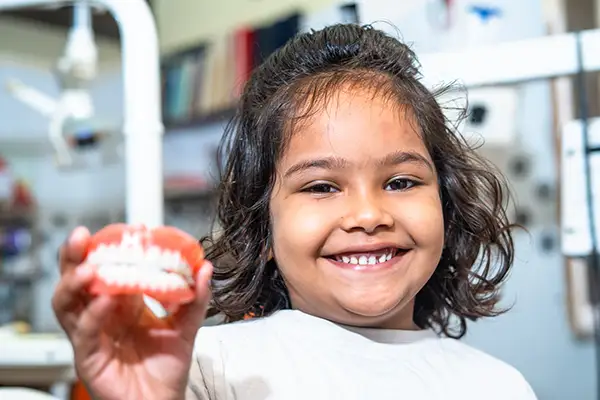 The most effective way to prevent dental anxiety in your child is to manage your own. That might sound oversimplified, but small changes in how you talk about and prepare for dental visits can make a real difference. The most effective way to prevent dental anxiety in your child is to manage your own. That might sound oversimplified, but small changes in how you talk about and prepare for dental visits can make a real difference.
Start by reframing the narrative. Instead of describing the dentist as someone who fixes problems, talk about them as a friendly helper who keeps teeth strong and healthy. Use positive, matter-of-fact language: “We’re going to get your teeth counted and cleaned” works much better than “Don’t worry, it’ll be over quickly.”
If your own anxiety is significant, consider addressing it before your child’s appointment. Talk to your dentist about your concerns; many practices, including ours, are experienced in working with anxious families and can walk you through what to expect. Some parents find it helpful to visit the office for a brief meet-and-greet before the actual appointment, so the environment feels familiar.
For children who are already showing signs of dental fear, a pediatric dental team trained in behavior management can use age-appropriate techniques to build comfort gradually. Options like sedation dentistry for kids are also available for situations where extra support is needed.
Building a Positive Dental Experience
A few practical habits can help set the tone for a lifetime of comfortable dental visits. Role-playing at home is one of the simplest and most effective approaches. Let your child “examine” a stuffed animal’s teeth, then take turns being the patient. This turns an unfamiliar experience into a game.
Read children’s books about visiting the dentist in the days leading up to the appointment. Familiarity reduces fear. After the visit, celebrate the accomplishment with praise or a small reward. Focus on what your child did well: “You sat so still and opened wide; that was awesome!”
Above all, stay calm and positive yourself. Your child takes emotional direction from you. When you walk into the dental office relaxed and smiling, your child is far more likely to do the same. Check out our resources for parents for more tips on preparing your family for dental visits across North Carolina.
Frequently Asked Questions
At what age do kids typically develop dental anxiety?
Dental anxiety can appear as early as age two or three, particularly if a child has picked up on a parent’s fear. However, it most commonly becomes noticeable between ages four and six, when children become more aware of unfamiliar environments and sensations.
Can a child outgrow dental fear on their own?
Some children do become more comfortable over time, especially with consistent positive experiences. However, without active intervention, dental anxiety often persists into adulthood. Early, supportive visits with a pediatric dental team can help prevent long-term fear.
Should I stay in the room during my child’s appointment?
This depends on your child’s age and comfort level. For very young children, having a parent nearby is usually helpful. For older kids, stepping back can actually encourage independence and allow the dental team to build their own rapport with your child.
What if my child is too anxious to sit through a dental visit?
Pediatric dentists are trained in techniques for helping anxious children feel safe. If your child needs extra support, sedation options can help them relax and receive the care they need comfortably. Talk to your dental team about what approach is best for your child.
Where can I find a kid-friendly dentist in North Carolina?
NC Pediatric Dentistry has offices throughout North Carolina designed specifically for children. Visit our locations page to find a convenient office near you and schedule your child’s visit.
|
|