Your Child's Lisp Might Be a Dental Issue, Not Just a Speech Habit
Posted on 6/8/2025 by NC Pediatric Dentistry |
 When a child has a lisp or struggles to pronounce certain sounds, most parents assume it’s a speech habit they’ll grow out of, but the cause may actually be dental. Conditions like tongue ties, lip ties, and misaligned teeth can restrict tongue movement and airflow in ways that directly affect how your child forms words. For families across North Carolina, understanding the connection between oral anatomy and speech can open the door to solutions you might not have considered. When a child has a lisp or struggles to pronounce certain sounds, most parents assume it’s a speech habit they’ll grow out of, but the cause may actually be dental. Conditions like tongue ties, lip ties, and misaligned teeth can restrict tongue movement and airflow in ways that directly affect how your child forms words. For families across North Carolina, understanding the connection between oral anatomy and speech can open the door to solutions you might not have considered.
This post covers the dental issues that commonly contribute to speech difficulties in children, how to tell whether your child’s lisp has an oral cause, and what pediatric dental care options are available. If speech therapy alone hasn’t resolved your child’s lisp, the answer might be in their mouth, not their habits.
On This Page
How Your Child’s Mouth Affects Their Speech
Clear speech depends on precise coordination between the tongue, lips, teeth, and palate. When any of these structures are restricted or positioned abnormally, it changes how air moves through the mouth and where the tongue can reach. The result is often a lisp, difficulty with certain consonants (like “s,” “z,” “t,” “d,” “l,” or “r”), or unclear speech that doesn’t improve with age.
A common misconception is that all speech issues are behavioral or developmental. While that’s true in some cases, structural problems in the mouth can make it physically difficult for a child to produce sounds correctly, no matter how much they practice. That’s why it’s important to consider the dental side of the equation, especially if speech therapy progress has stalled.
Tongue Ties and Lip Ties as Speech Barriers
A tongue tie (ankyloglossia) occurs when the thin band of tissue connecting the tongue to the floor of the mouth is too short, too tight, or too thick. This restricts the tongue’s range of motion, making it hard for a child to lift their tongue to the roof of the mouth or extend it past their teeth. Sounds that require the tongue tip to touch the palate, like “l,” “t,” “d,” and “n,” are often the most affected.
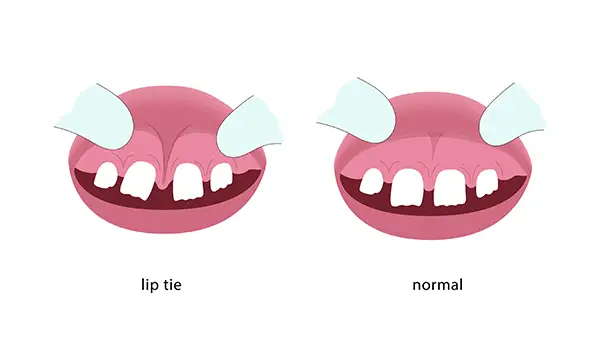
A lip tie works similarly but involves the tissue connecting the upper lip to the gum. A restrictive lip tie can affect how a child forms sounds that require lip movement, like “p,” “b,” and “m.” You can learn more about how we identify and address these conditions on our lip ties and tongue ties page.
When a tongue tie or lip tie is contributing to speech difficulty, a frenectomy may be recommended. This is a quick, gentle procedure that releases the restrictive tissue, giving the tongue or lip more freedom to move. In many cases, speech improvement follows, especially when paired with targeted speech therapy exercises after the release.
How Dental Alignment Affects Speech Clarity
Tongue ties and lip ties aren’t the only oral factors that influence speech. The position of your child’s teeth also plays a role. An open bite, where the front teeth don’t touch when the mouth is closed, can cause air to escape during certain sounds, producing a frontal lisp. Crowded or misaligned teeth may force the tongue into unnatural positions, further altering pronunciation.
Gaps between the front teeth, an overbite, or a crossbite can each contribute to speech challenges in their own way. In our experience, parents are often surprised to learn that the speech issue they’ve been working on in therapy is partly caused by the way their child’s teeth fit together.
Addressing alignment issues through orthodontics or other dental treatments can sometimes resolve or significantly improve the speech concern. Your child’s pediatric dentist can evaluate whether alignment is playing a role and discuss what options make sense given their age and development.
Getting the Right Evaluation for Your Child
If your child has a persistent lisp or speech difficulty, a dental evaluation alongside a speech-language assessment gives you the fullest picture. Our team looks at tongue mobility, lip function, bite alignment, and the overall structure of your child’s mouth to determine whether anything physical is contributing to the issue.
We often work alongside speech-language pathologists in North Carolina who understand the connection between oral anatomy and speech. When a structural issue is identified and treated, speech therapy tends to become more effective because the physical barrier is no longer in the way.
A question we hear from parents frequently is whether their child is too young or too old for evaluation. The short answer: it’s never too early to look, and it’s rarely too late to help. Early identification means earlier intervention, but older children and teens benefit from treatment too.
Taking the Next Step
If your child has been struggling with a lisp or unclear speech, it’s worth exploring whether a dental issue is part of the picture. The team at NC Pediatric Dentistry has experience evaluating tongue ties, lip ties, and bite concerns that affect speech. Visit our locations page to find a North Carolina office near you and schedule an evaluation.
Frequently Asked Questions
Can a tongue tie cause a lisp?
Yes. A tongue tie can restrict the tongue’s ability to reach the positions needed for certain sounds, which can result in a lisp or difficulty with consonants like “l,” “t,” “d,” and “r.”
How do I know if my child’s lisp is dental or just developmental?
A pediatric dental evaluation can help determine whether a structural issue like a tongue tie, lip tie, or bite problem is contributing. If speech therapy isn’t producing expected progress, a dental assessment is a smart next step.
What is a frenectomy, and is it safe for kids?
A frenectomy releases restrictive tissue under the tongue or upper lip. It’s a quick, minimally invasive procedure that pediatric dentists perform regularly. Most children recover within a few days.
Will fixing a tongue tie automatically fix my child’s speech?
Releasing a tongue tie removes the physical restriction, but most children benefit from speech therapy exercises afterward to retrain the tongue. The combination of both typically produces the best results.
At what age should I have my child evaluated for a tongue tie?
Tongue ties can be identified as early as infancy. If speech concerns develop later, an evaluation at any age is appropriate. Early identification allows for earlier intervention, but older children and teens can still benefit from treatment.
|
|