How to Prepare a Child with Autism for a Sensory-Friendly Dental Visit
Posted on 3/23/2026 by NC Pediatric Dentistry |
 Taking a child with autism to the dentist can feel overwhelming for both the child and the parent, but the right preparation and the right dental team make all the difference. Many children on the autism spectrum experience sensory sensitivities that make the sights, sounds, and textures of a dental office feel intense. Bright overhead lights, the hum of equipment, unfamiliar tastes, and the sensation of someone working inside their mouth can trigger anxiety or sensory overload. Taking a child with autism to the dentist can feel overwhelming for both the child and the parent, but the right preparation and the right dental team make all the difference. Many children on the autism spectrum experience sensory sensitivities that make the sights, sounds, and textures of a dental office feel intense. Bright overhead lights, the hum of equipment, unfamiliar tastes, and the sensation of someone working inside their mouth can trigger anxiety or sensory overload.
The good news is that sensory-friendly dental care is becoming more widely available, and families across North Carolina have options. This guide shares practical strategies you can use at home before the appointment and explains what a sensory-friendly dental visit looks like in practice. Our team at NC Pediatric Dentistry works with children of all abilities, and we want every visit to feel safe.
On This Page
Why Dental Visits Can Feel Different for Children with Autism
For neurotypical children, a dental visit involves a few minutes of mild discomfort that they can push through. For a child with autism, those same minutes can involve a cascade of sensory input that’s genuinely difficult to process. The taste of fluoride, the pressure of a dental mirror, the vibration of a polishing tool, and the close proximity of an unfamiliar adult can each be a challenge on their own. Combined, they can become too much.
Children on the spectrum also tend to rely on routine and predictability. A dental office, with its unfamiliar layout, unexpected sounds, and variable timing, disrupts the structure many children depend on to feel secure. Understanding this isn’t about making excuses; it’s about recognizing that the barrier is real and fixable with the right approach.
Communication differences add another layer. A child who is nonverbal or has limited verbal communication may not be able to tell the dental team what feels uncomfortable or scary. That’s why preparation at home and communication between parents and the dental team before the visit matters so much.
How to Prepare at Home Before the Appointment
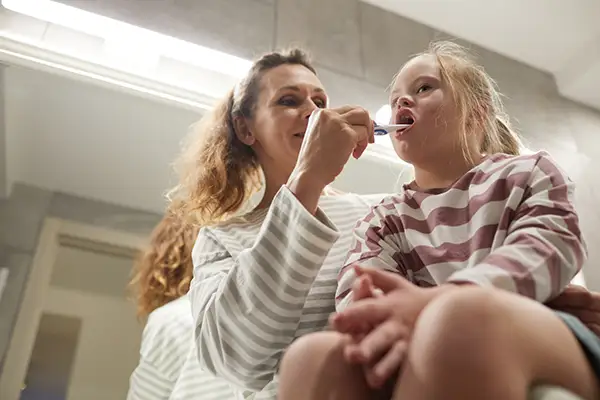 Preparation is the single most effective tool parents have. The goal is to reduce the number of surprises your child will encounter at the office. Here are strategies that families tell us work well: Preparation is the single most effective tool parents have. The goal is to reduce the number of surprises your child will encounter at the office. Here are strategies that families tell us work well:
Use a social story. A social story is a short, visual narrative that walks your child through the dental visit step by step. Include pictures of a dental chair, a toothbrush, a mirror, and the dentist. Describe what will happen in simple, positive language. Read it together several times in the days leading up to the appointment.
Practice at home. Let your child sit in a reclined position while you count their teeth with a clean finger or a soft toothbrush. Use a small flashlight so they get used to a light near their face. Practice opening wide and holding still for a few seconds. Keep it playful and low-pressure.
Visit the office beforehand. Many pediatric dental practices, including ours, welcome pre-visit tours. Walking through the space when no treatment is happening lets your child see the waiting room, the hallway, and the treatment chair on their own terms.
Bring comfort items. Noise-canceling headphones, sunglasses (for the overhead light), a weighted lap pad, or a favorite toy can help your child self-regulate during the visit. Let your dental team know in advance what your child finds calming.
What a Sensory-Friendly Dental Visit Looks Like
A practice experienced in working with children with autism will adjust the environment, not expect the child to adjust to it. That can include dimming overhead lights, turning off background music, reducing wait times, and scheduling the appointment during a quieter part of the day.
Our team uses a “tell-show-do” approach: before doing anything, we tell the child what’s going to happen, show them the tool we’ll use (letting them touch it if they want), and then do the step. This removes the surprise factor and gives the child a sense of control.
For some children, the full exam doesn’t happen on the first visit, and that’s okay. Desensitization visits, where the child simply sits in the chair, meets the team, and gets comfortable with the environment, are a normal and valuable part of the process. Pushing too hard too fast can set back progress. We’d rather take two or three short visits to build trust than force a full exam that leaves the child afraid to come back.
When Sedation May Be an Option
For some children, even the best preparation and environmental adjustments aren’t enough to get through a necessary procedure comfortably. In those situations, sedation options can help.
Nitrous oxide (sometimes called “laughing gas”) is the mildest form and works well for children who are mildly anxious but can still cooperate. Oral sedation provides a deeper level of relaxation for children who need more support. For extensive treatment or children who cannot tolerate the dental environment at all, general anesthesia performed in a hospital or surgical center setting may be recommended.
The decision to use sedation is always made collaboratively between parents and the dental team. Our goal is to choose the least invasive option that still allows safe, effective care. We walk every family through the specifics, including what to expect before, during, and after the appointment.
Finding the Right Practice for Your Family
Not every dental office is equipped to work with children on the autism spectrum, and that’s okay. What matters is finding a team that has the training, the patience, and the flexibility to meet your child where they are. NC Pediatric Dentistry has locations across North Carolina with teams experienced in special needs dental care. Visit our locations page to find an office near you and schedule your child’s visit.
Frequently Asked Questions
How do I tell the dental office about my child’s needs?
Call ahead and share specifics about your child’s sensory sensitivities, communication style, and anything that helps them feel calm. The more the team knows in advance, the better they can prepare the environment and their approach.
What if my child can’t sit still for the exam?
That’s more common than you might think, and an experienced pediatric dental team will have strategies ready. Desensitization visits, shorter appointments, and sedation options are all tools that can help. The goal is progress, not perfection in one visit.
Is nitrous oxide safe for children with autism?
Nitrous oxide is generally considered safe for children, including those with autism. It takes effect quickly, wears off within minutes after the mask is removed, and allows the child to remain awake and responsive. Your dentist will review your child’s medical history to confirm it’s appropriate.
Can I stay with my child during the dental visit?
Most pediatric dental practices welcome parents in the treatment area, especially for children with special needs. Your presence can be a powerful source of comfort. Ask the office about their policy when you schedule.
How often should my child with autism see the dentist?
The standard recommendation is every six months, the same as for all children. Consistent visits help build familiarity with the office and the team, which tends to reduce anxiety over time. Your pediatric dentist may recommend a different schedule based on your child’s specific needs.
|
|